
This episode is about:
Eve – the prototype of a sinful temptress that influenced how people would view women for centuries. Vilifying Eve became a tradition despite there is no evidence of her actually seducing Adam in the original text, the claim of female spiritual inferiority was reconstructed between the lines by men projecting their biased attituded towards women.
Fun Fact: Tertullian was the first to produce extensive works on Christianity and according to him Eve persuaded Adam to eat the apple, creating the first image of her as the temptress. Not only did he present Eve as a seductress, responsible for Adams fall, but he has connected all females to Eve thus saying they all possess a similar seductive nature and pose a danger to men.
Sources:
– Afsar, Ayaz. “Speech Acts in the Story of Adam and Eve in the Bible and the Qur’ān.” Islamic Studies 54, no. 3/4 (2015): 185-202.
– 3 Genesis, 11:12
– 1 Tim 2:11b:14
– Leonard, Eugenie Andruss. “ST. PAUL ON THE STATUS OF WOMEN.” The Catholic Biblical Quarterly 12, no. 3 (1950): 311-20.
– Higgins, Jean M. “The Myth of Eve: The Temptress.” Journal of the American Academy of Religion 44, no. 4 (1976): 639-47.
– Arbel, Vita Daphna. “Guarding His Body, Mourning His Death, and Pleading for Him in Heaven: On Adam’s Death and Eve’s Virtues in the Greek Life of Adam and Eve.” In Coming Back to Life: The Permeability of Past and Present, Mortality and Immortality, Death and Life in the Ancient Mediterranean, edited by Tappenden Frederick S. and Daniel-Hughes Carly, by Rice Bradley N., 103-26. Montreal: McGill University Library, 2017.
– Parker, Julie Faith. “Blaming Eve Alone: Translation, Omission, and Implications of עמה in Genesis 3:6b.” Journal of Biblical Literature 132, no. 4 (2013): 729-47.
– Petersen, Boyd Jay. “”Redeemed from the Curse Placed upon Her”: Dialogic Discourse on Eve in the Woman’s Exponent.” Journal of Mormon History 40, no. 1 (2014): 135-74.
– Boršić, Luka, and Ivana Skuhala Karasman. “Isotta Nogarola—The Beginning of Gender Equality in Europe.” The Monist 98, no. 1 (2015): 43-52.
– https://journals.msvu.ca/index.php/atlantis/article/view/4888/4086
– http://www.tertullian.org/anf/anf04/anf04-06.htm#TopOfPage
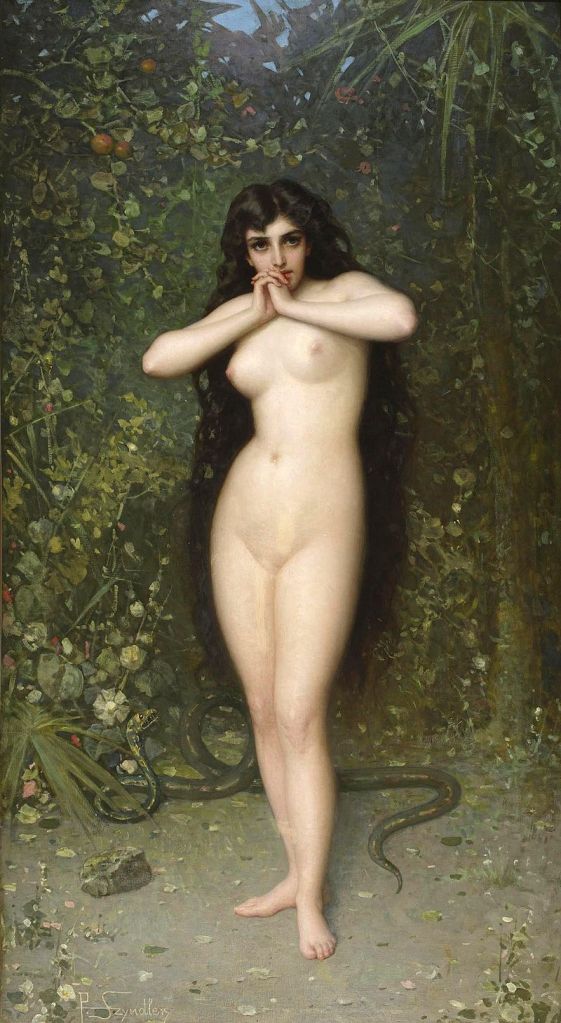
- Eve by Pantaleon Szyndler, 1889
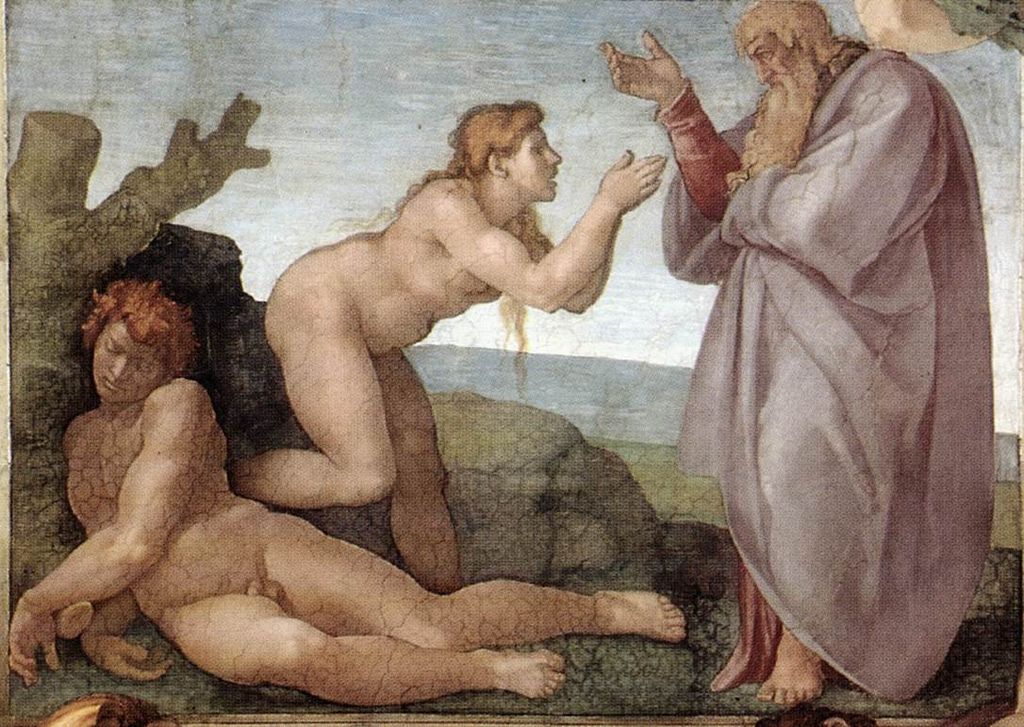
- The Creation of Eve, by Michelangelo, Sistine Chapel
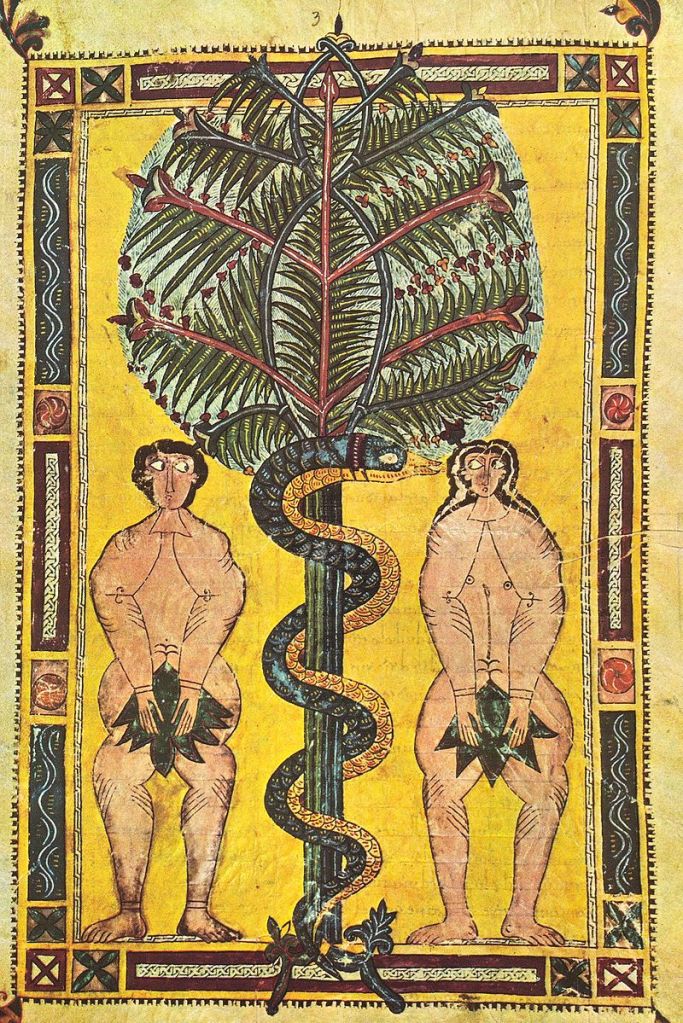
- Adam and Eve, 950
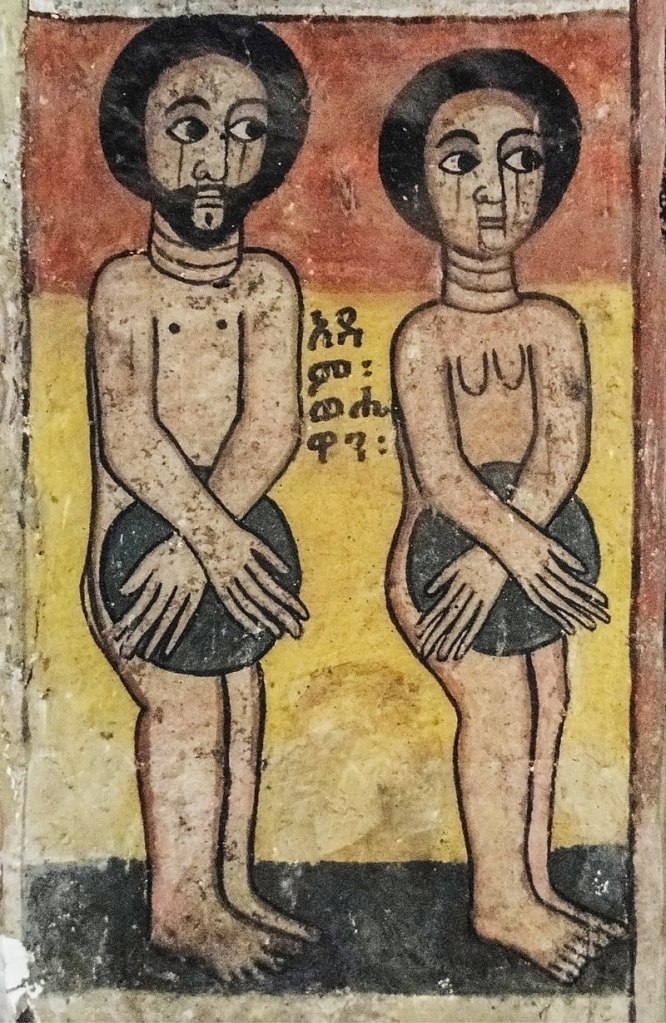
- Adam and Eve depicted, Abreha wa Atsbeha Church, Ethiopia
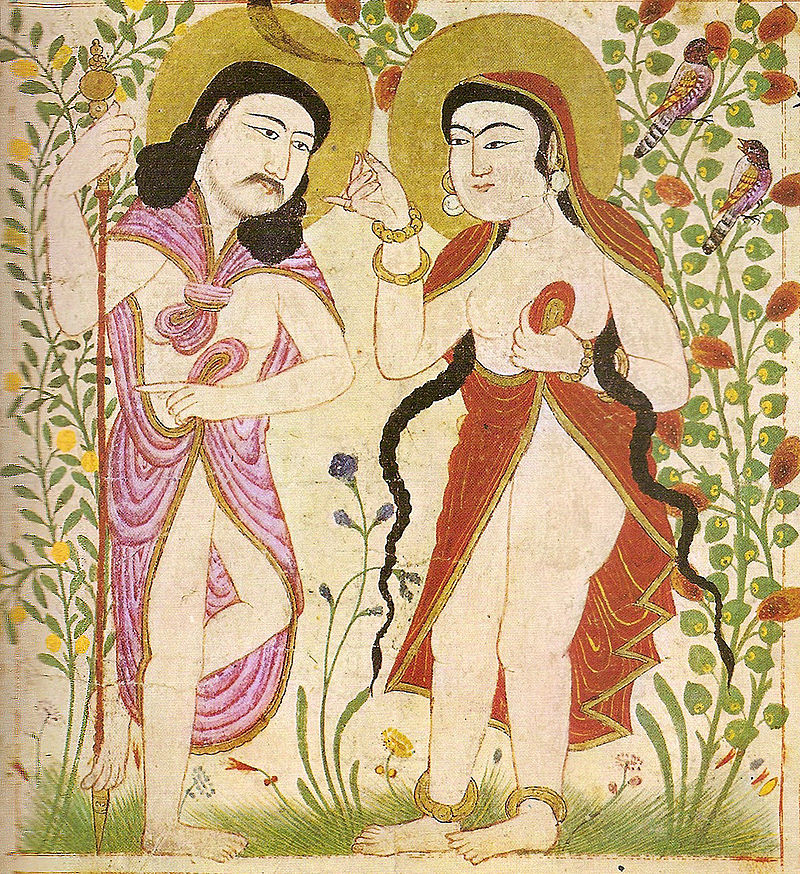
- Adam and Eve, Iran, 1294
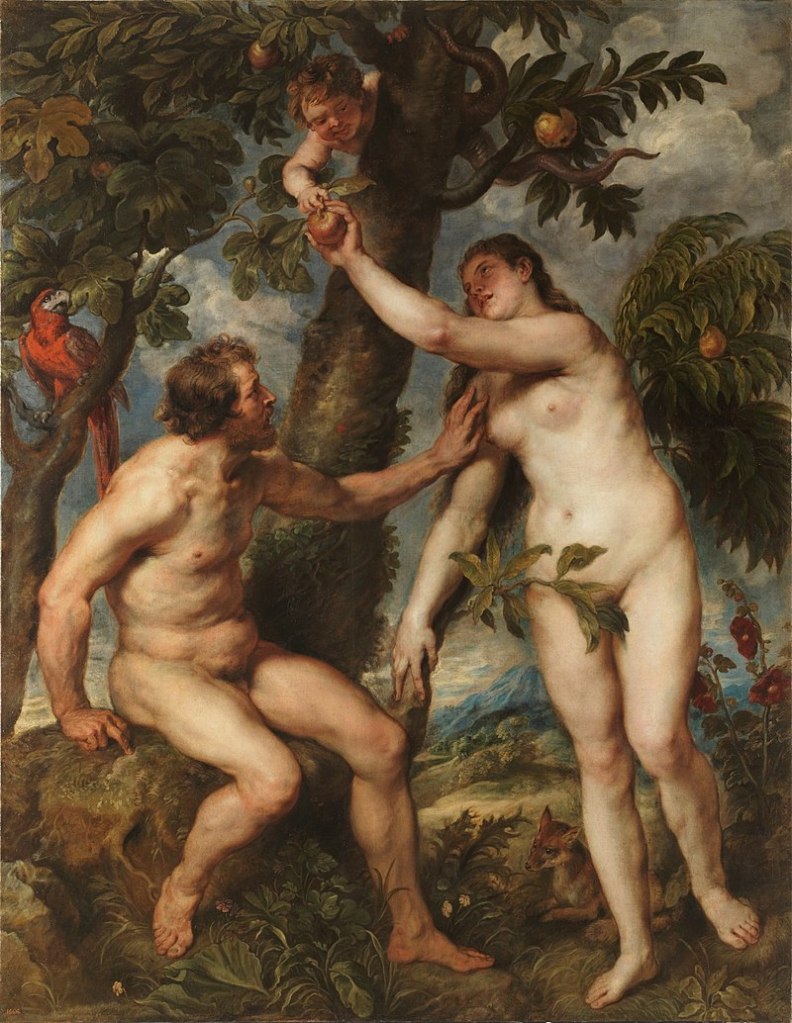
- The Fall of Man by Peter Paul Rubens, 1628

 Queens & Rebels